Sleep Maintenance Insomnia in Women Over 40: The Complete Scientific GuideSkip to content
Sleep Maintenance Insomnia in Women Over 40: The Complete Scientific Guide
Estimated reading time: 12 minutes
By Nura Noor, BSc Pharmacology (King's College London)
Specialized in Neurophysiology, Neuroimmunology, Neuropharmacology under Professors John F Tucker, Alan Gibson, Ian McFadzean
Key Discovery: If you are waking between 2 to 4 AM multiple nights per week, you are experiencing a specific sleep maintenance pattern that is common in midlife. Reviews show that around 40 to 60 percent of women in the menopause transition report sleep disturbance, with night-time awakenings and increased wake-after-sleep-onset especially common. This pattern is driven by measurable changes in circadian signals, hormones, neurotransmitters, and inflammatory tone.
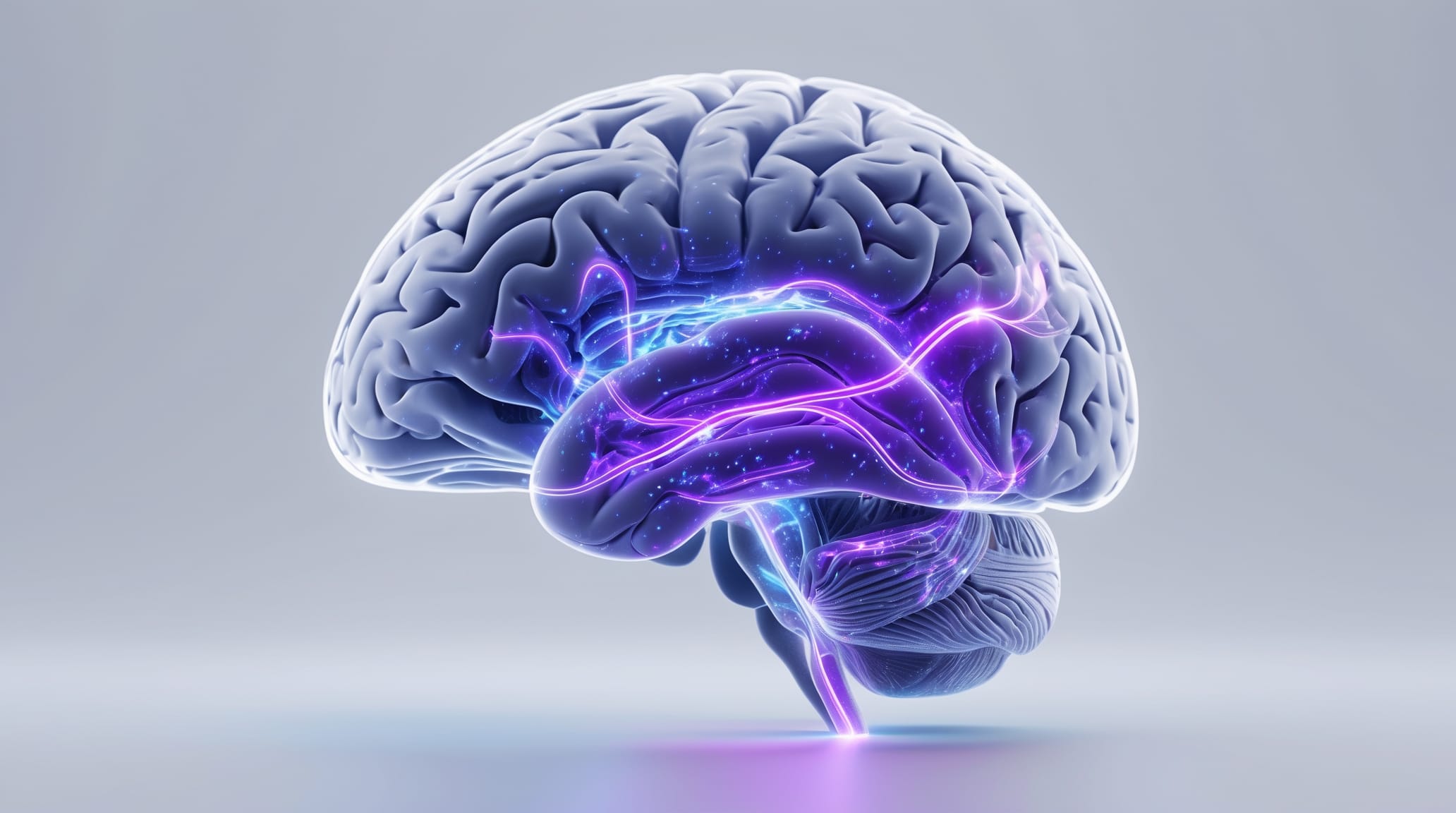
Neurobiological signatures of sleep maintenance disruption in midlife women.
Evidence snapshot, prevalence and phenotype: Sleep difficulties such as night-time awakenings and higher wake-after-sleep-onset are the most common complaints associated with the menopause transition. Review, Baker et al. • Menopause 2024 review
Why Your Brain's Sleep System Changes After 40
Your sleep maintenance insomnia is not about losing the ability to sleep. The systems that maintain continuous sleep, circadian timing, hormonal support, neurotransmission, and inflammation control, are reorganizing.
The Core Understanding: Sleep maintenance requires tight coordination between your circadian clock, hormone production, neurotransmitter synthesis, and inflammatory regulation. Changes in one system cascade through the network.
The Suprachiasmatic Nucleus and Circadian Amplitude
As circadian robustness weakens with age and hormonal change, early morning hours, when sleep drive is lowest, become vulnerable. Strengthening circadian signals with timed light exposure and strict evening darkness improves sleep continuity.
Light and melatonin durability: Evening room light before bedtime suppresses melatonin and shortens its duration, directly affecting sleep maintenance. Clinical guidance supports timing light based on whether you are phase-advanced or phase-delayed. JCEM 2011 • AASM circadian guideline
Circadian timing and clock gene dynamics influence sleep continuity in early morning hours.
The Inflammation Factor Most Doctors Miss
Sleep maintenance problems are linked with low grade inflammation. Elevated CRP and IL-6 correlate with disturbed sleep. Reducing inflammatory drivers can improve sleep stability.
Inflammation link: Meta analysis shows sleep disturbance is associated with higher CRP and IL-6. Irwin et al., 2015
Dietary patterns that modulate inflammatory tone can support sleep stability.
The Neurotransmitter Cascade That Changes Everything
GABA and melatonin dynamics shift in midlife. Supportive approaches aim to maintain these signals across the whole night rather than merely sedate at sleep onset.
Melatonin Production and Duration
Many midlife sleepers still initiate sleep but wake in the early morning as melatonin wanes. Addressing evening light exposure and considering prolonged release melatonin in eligible ages can help.
Prolonged release melatonin, 55 years and older: Randomized trials show improved sleep quality and morning alertness with 2 mg nightly. Lemoine 2007 • Wade 2010
Evidence Based Solutions That Address Root Causes
Circadian Amplitude Enhancement
Protocol starter: Use a consistent rise time and timed light exposure based on your phase, morning light if delayed and avoid late night bright light if advanced. Pair with strict evening darkness to extend nocturnal melatonin.
Inflammation Aware Sleep Support
Shape lifestyle levers that modulate inflammatory tone, nutrition quality, movement, stress care, and prioritize light hygiene with dim and warm light before bed and blackout at night.
Neurotransmitter System Support
GABA supportive routines such as magnesium glycinate and relaxation training plus, where appropriate, prolonged release melatonin in age eligible groups can help maintain signals across the night. Always align dosing and timing with a clinician.
The Precision Medicine Approach to Sleep Maintenance
Individual chronotype, hormone status, and lifestyle constraints shape the plan. Track your wake after sleep onset, light timing, and evening brightness to iterate toward stability.
Frequently Asked Questions About Sleep Maintenance Insomnia
Why do I wake up at 3 AM every night during perimenopause?
The menopause transition commonly brings sleep maintenance problems. Hormonal shifts plus a more fragile circadian system make the 2 to 4 AM window vulnerable.
Is waking at 3 AM a hormone issue or a circadian issue?
Often both. Lower estrogen and progesterone reduce sleep continuity, while circadian signals can be weaker or mis-timed. Timed light and strict evening darkness influence melatonin duration and help maintain sleep.
What is the best way to time bright light if I wake at 3 AM?
If you are phase-advanced you should avoid late night bright light and consider carefully timed schedules per clinical guidance. If you are phase-delayed use morning light. Timing is individualized.
Does prolonged-release melatonin help with middle-of-the-night waking?
In adults aged 55 and over, 2 mg prolonged-release melatonin has randomized trial support for improved sleep quality and morning alertness. For younger perimenopausal women the evidence is mixed, so discuss with a clinician.
Can progesterone help perimenopausal sleep? Is it safe?
A 2023 randomized trial in perimenopausal women reported better perceived sleep quality and fewer night sweats with oral micronized progesterone versus placebo, without serious adverse events. Suitability and dose are medical decisions.
Does inflammation really disrupt sleep maintenance?
Meta analytic evidence links sleep disturbance with higher inflammatory markers such as CRP and IL-6. Addressing light timing, activity, nutrition, and stress can help.
What are the first 3 changes I should try this week?
One, darkness discipline, keep light low and warm for 2 to 3 hours before bed. Two, consistent rise time with timed light per your circadian phase. Three, a nightly 30 to 45 minute low stimulation wind down with CBT I micro skills.
The Double Burn: Inflammation and Anxiety in Menopause — How to Break the Loop Skip to content Hot Flashes & Inflammation › Anxiety & Mood The Double Burn: Why Inflammation and Anxiety Fuel Menopause (and How to Break Free) Written by Nura Noor, BSc Pharmacology (King’s College London), specialized in neurophysiology Hot flashes often travel…
Top 5 Menopause AI Tools for Emotional Wellness – NuraCove ✨ Top 5 Menopause AI Tools for Emotional Wellness By NuraCove • Midlife Wellness, AI Tools, Emotional Healing Why Menopause AI Tools for Emotional Wellness Are a Game-Changer 🔥 Let’s be real: midlife is a wild ride. One minute you’re tearing up at an ad…
Why You Can’t Stop Worrying: The Brain Science Behind Worry Loops Skip to main content Home Anxiety Support Worry Patterns Worry Loop Brain Patterns Why You Can’t Stop Worrying: The Brain Science Behind Worry Loops Understanding the neural mechanisms that trap you in repetitive anxious thinking By Nura Noor BSc Pharmacology (King’s College London) 14…
How Trauma Trained Me for Multi-Agent AI Systems | NuraCove How Trauma Trained Me for Multi-Agent AI Systems By Nura Noor As a trauma-informed AI founder and pharmacologist, I didn’t learn multi-agent processing from textbooks—I lived it. This is how pain memory became the architecture for revolutionary AI emotional support that actually understands women’s complexity….
Lifetime Access vs. Subscription: Which AI Sleep Coaching Model Is Right for You? Lifetime Access vs. Subscription: Which AI Sleep Coaching Model Is Right for You? When shopping for AI sleep coaching, you’ll encounter two pricing models: annual subscriptions ($70-400/year) or lifetime access ($200-1,000 one-time). Subscriptions feel affordable—$70/year seems reasonable, $247 upfront feels expensive. But…
I’m Not Optimized. I’m Holy. | NuraCove I’m Not Optimized. I’m Holy. By Nura Noor As a 50-year-old AI founder and pharmacologist, I refuse to be optimized. I am not a funnel, not a conversion point, not a productivity hack in a dress. I am cosmic inefficiency—and that’s exactly why my trauma-informed AI works when…