
The 2 AM Solution: Emergency Cool-Down Techniques That Work

The 2 AM Solution: Cool-Down Techniques for Night Sweats (Step-by-Step)
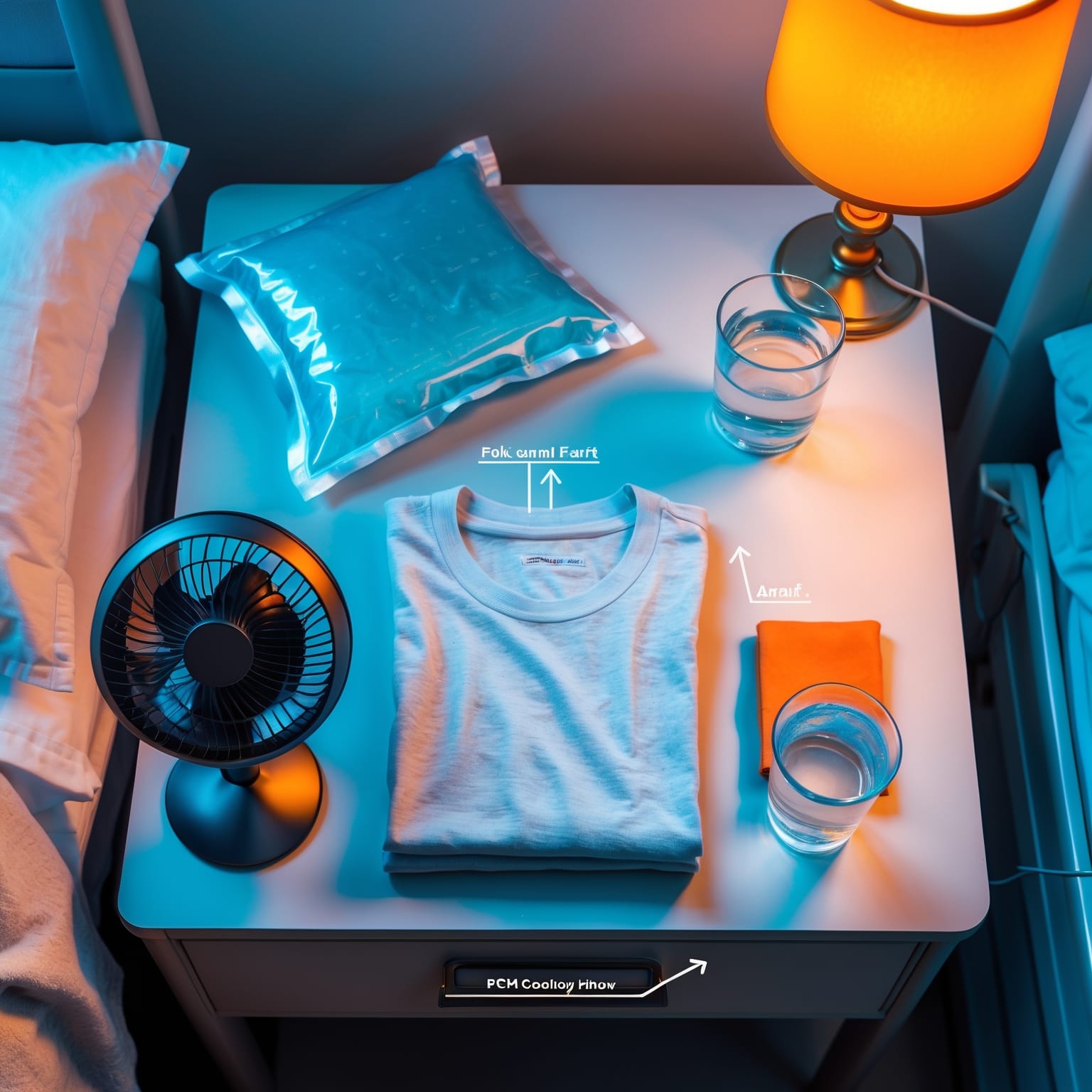
Quick Answer Box
Tonight: Set the room near the mid-60s °F, start airflow at torso and neck, and keep a cold pack on your nightstand.
Gear: Cooling pillow or gel insert, small cold pack, cotton top, dim amber light, water glass.
See a clinician: If awakenings occur ≥3 nights/week, or you suspect sleep apnea or persistent insomnia.
Night sweats are vasomotor symptoms: skin blood flow surges and sweat rises quickly. The strategies below target two levers—faster heat removal and lower arousal—so your body can re-settle into sleep. A cooler room improves sleep efficiency; steady airflow reduces local heat buildup; and a short cognitive-behavioral “reset” helps your brain link bed with sleep again.

The 2 AM cool-down protocol
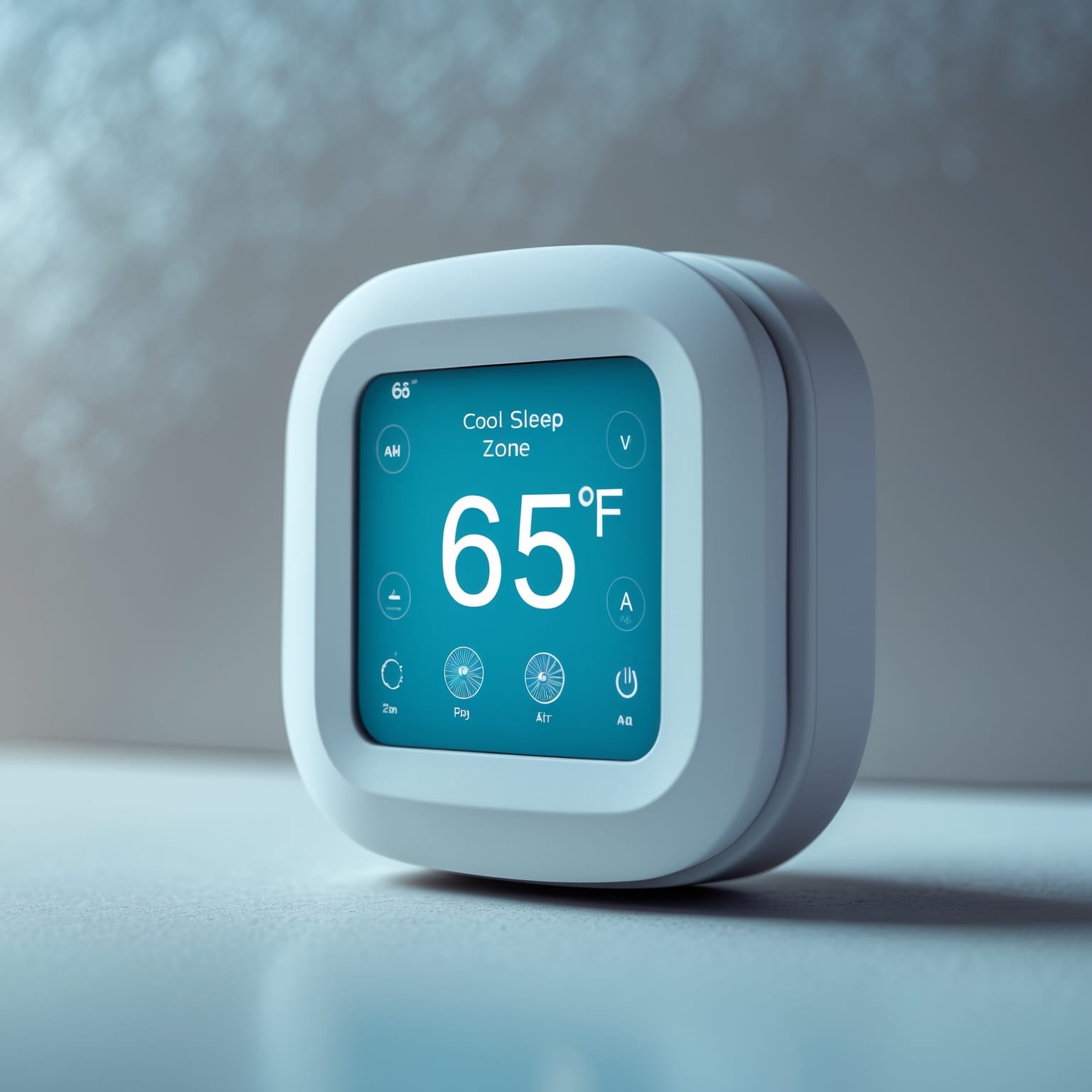
- Vent and cool the room: Drop room temperature toward the mid-60s °F. Aim a fan at torso/neck (not the face) for continuous convective cooling.
- Pulse-point and palm cooling: Apply a cold pack or cooling towel to wrists and sides of the neck; briefly cool the palms to accelerate heat transfer.
- Dry and swap layers: Pat dry, change to a dry cotton top, and flip to the cool side of your cooling pillow or pad.
- Mini CBT-I reset: Sit on the bed edge in dim light for a brief arousal reset (see next section). Return to bed when drowsy hits.
- Hydrate and lights out: Sip cool water; keep screens off to protect melatonin.
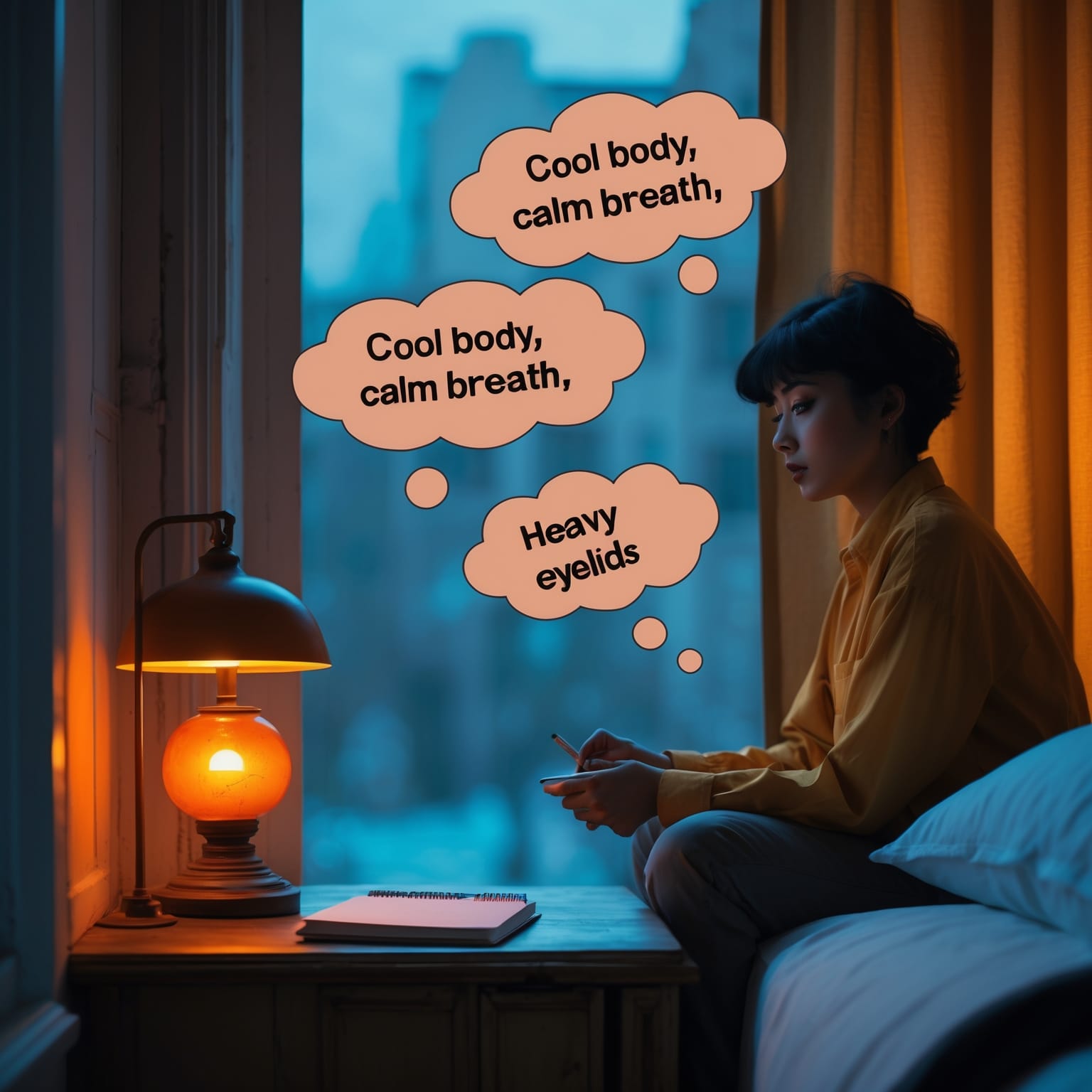
Mini CBT-I: 3-Minute Reset
This ultra-short routine borrows from Cognitive Behavioral Therapy for Insomnia (CBT-I) principles used in clinical trials for midlife sleep:
- Go neutral (30–45 sec): Sit on the bed edge under dim amber light. Keep posture easy. No problem-solving, no phones.
- 4-2-6 breaths (60–90 sec): Inhale 4, hold 2, exhale 6—five cycles. Let exhale lengthen naturally.
- One calm cue (15–30 sec): Silently label: “Temporary heat, cooling now.” Avoid judgment.
- Return on drowsy: If sleepiness arises, lights out and lie down. If still alert after ~15 minutes in bed, repeat the reset (stimulus control).
These micro-steps reduce physiological arousal and protect the bed-sleep association without turning the night into a project.
Build your bedside kit (affiliate picks)
Affiliate disclosure: We may earn a commission if you purchase through links below (at no extra cost to you). We only feature products that fit the protocol.
Before-bed prevention that pays off
- Evening routine: Cool shower; avoid late spicy meals/alcohol; stop caffeine ≥8 hours pre-bed.
- Room setup: Keep a stable cool set-point, breathable bedding, and steady airflow.
- Medical options: If night sweats persist, ask about evidence-based nonhormone options (e.g., certain SSRIs/SNRIs; NK3R antagonist fezolinetant).
Free 5-Day Hot Flash Reset (email course)
Want a done-for-you plan? In five short emails you’ll get: a printable trigger tracker, a 2 AM bedside kit checklist, Mini CBT-I prompts, and a one-page night-sweats protocol.
Frequently asked questions
- What temperature should I aim for at night to reduce night sweats?
- Many sleepers do best in a cooler room—often mid-60s °F. Combine a cool set-point with breathable bedding and steady airflow.
- What is the fastest way to cool down at 2 AM after a hot flash?
- Increase airflow at torso/neck, cool wrists and sides of the neck, briefly cool the palms, swap to a dry cotton top, then use the 3-minute Mini CBT-I reset before returning to bed.
- Do cooling pillows/pads actually help?
- Small trials/pilot data suggest cooling surfaces can reduce heat buildup and support sleep continuity for some people with vasomotor symptoms.
- Which nonhormonal treatments should I ask my clinician about?
- Evidence-based choices include certain SSRIs/SNRIs and the NK3R antagonist fezolinetant. Discuss benefits, risks, and eligibility for your health history.
Scientific references
- McCurry SM, Guthrie KA, et al. Cognitive behavioral therapy for insomnia in peri- and postmenopausal women with hot flashes (MsFLASH RCT). JAMA Intern Med. 2016. PubMed
- The North American Menopause Society. Nonhormone therapy position statement. 2023. PDF
- Sleep Foundation. Best temperature for sleep. Guidance
- Baker FC, de Zambotti M, et al. Sleep and sleep disorders in the menopausal transition. Sleep Med Clin. 2018. PMC
- Reed SD, et al. Night sweats, sleep disturbance, and depression among women. Am J Obstet Gynecol. 2007. PMC
- Grahn DA, Cao VH, Heller HC. Heat extraction through the palm of one hand improves recovery. J Strength Cond Res. 2012. PubMed
- Composto K, et al. Embr Wave thermal device for vasomotor symptoms. Menopause. 2021. PubMed
Medical disclaimer: This content is educational and not a substitute for professional medical advice. Affiliate disclosure: We may earn commissions on purchases made via links. This supports free resources like our 5-Day Reset.
I needed this so badly. My night sweats hit like clockwork around 1:30–3:00am and I wake up soaked with my heart racing. I’m pretty sure it’s perimenopause but I’m also wondering: how do I tell the difference between a hot flash waking me up vs waking up first (stress/adrenaline) and then getting the sweat?
Also: do you have any tweaks for people who can’t cool the whole room (partner hates a cold bedroom), and for people who get goosebump-cold right after the sweating stops? I end up cycling between “lava” and “shivering” and it’s ruining the rest of the night.
You’re describing a very common pattern, and the distinction you’re asking about is exactly the right one.
Hot flash → wake pattern (vasomotor first): you tend to wake with a sudden surge of heat (often chest/neck/face), sweating comes on fast, and cooling the skin (airflow + wrists/neck/palms) settles it fairly quickly.
Wake → sweat pattern (arousal first): you wake mentally “on” (thoughts, worry, clock-checking), heart rate is already up, and the sweating can follow the stress spike. In that case, the Mini CBT-I reset is the make-or-break step because it lowers physiological arousal so the body doesn’t keep throwing fuel on the fire.
For the “partner hates a cold room” situation: you can do micro-cooling instead of whole-room cooling:
aim a small fan at your torso/neck only (not face)
use pulse-point/palm cooling (wrists + sides of neck + brief palm cooling)
keep a dry cotton top ready so you don’t stay damp (evaporation is a big part of the chill-after)
For the post-flush shivers: that’s usually the body overshooting after a heat dump. Try:
switch from cold pack to cool towel (less intense)
swap damp layers immediately
use a light breathable layer (not heavy duvet) so you can re-warm without trapping heat
And one safety note: if the night sweats come with loud snoring, gasping, morning headaches, or extreme daytime sleepiness, it’s worth screening for sleep apnea, because apnea can trigger sudden awakenings and sweating too.
Yes the 2 AM protocol still applies even if you’re on HRT, because it’s solving the immediate problem in the moment: heat removal + lowering arousal so you can fall back asleep. Think of HRT (when appropriate) as a baseline stabilizer, and the 2 AM steps as your rescue plan.
That said, if someone is on HRT and night sweats are still frequent, it’s worth checking a few common “why is this still happening?” buckets:
Dose/route/timing: Some people do better on transdermal vs oral, or need timing adjustments.
Still in perimenopause: Hormone levels can fluctuate wildly, so symptoms can break through even with treatment.
Triggers stacking: alcohol, late meals, spicy food, overheated bedding, a warm room, stress spikes.
Other sleep disruptors: sleep apnea, reflux/GERD, thyroid issues, low iron, certain meds, or chronic insomnia patterns.
On your second question: the Mini CBT-I reset + paced breathing is generally safe alongside nonhormonal options (SSRIs/SNRIs and fezolinetant) because it’s not a medication interaction—it’s a nervous system downshift. If anything, it often helps those treatments work better by reducing the “adrenaline loop” that keeps the body stuck in high alert.
A few practical “watch-fors” at 2 AM, though:
Dizziness/lightheadedness: can happen with dehydration, blood pressure shifts, or certain meds. If you’re prone to this, do the reset sitting (as written), keep movements slow, and sip water.
Breathwork intensity: keep it gentle. The goal is calm, not deep hyperventilation. If counting breaths makes you more anxious, switch to a simple cue like: “Exhale longer than inhale” for 5 cycles.
If you feel faint, chest pain, or palpitations that are new/worsening: that’s not a “push through it” moment—get medical advice.
And a helpful clinical framing for readers: if night sweats are happening 3+ nights/week, or you’re getting multiple awakenings per night, it’s reasonable to discuss both symptom control (HRT or nonhormonal options) and sleep continuity (CBT-I principles, screening for apnea/GERD, etc.). The best results often come from treating both.
If you want, tell me your rough pattern—how many nights/week, what time you wake, and whether you get heat first or panic first—and I’ll suggest a “most likely bucket” to investigate first (very low effort, no rabbit holes).
This explanation helps so much. I’m definitely more “wake to sweat” on nights when I’m stressed and then it spirals into clock-watching and panic.
2 more quick things (because I know other women will search this):
If someone is already on HRT but still getting night sweats, does the 2am protocol still apply the same way, or would you treat it differently?
And if someone can’t take hormones and is considering SSRIs/SNRIs or fezolinetant, is it safe to combine those with the breathing/CBT-I style reset, or is there anything to watch for (like dizziness at night)? thanks in advance.